
“Chạy đi, chạy đi, giặc Pôn Pốt tới!”
Run, run! The Pol Pot soldiers are here!
Chị Hà’s voice trembled as she spoke those words, and the entire bus fell silent.
I was nineteen in the summer of 2000, the youngest passenger on a tour from Vietnam to Cambodia—a journey I thought would be about ancient temples and historic sites. Instead, I found myself surrounded by veterans of the “forgotten war.” My life until then had been as uncomplicated as a blank sheet of paper.
The woman who spoke sat near the front, early forties, with a face that held both warmth and an unmistakable sadness. When she began to tell her story, I had no idea I was about to hear something that would stay with me forever—or that I wasn’t ready for what came next.
Her voice trembled as she recalled that desperate warning from when she lived near the border between An Giang Province (Vietnam) and Kandal and Takeo Province (Cambodia). One moonlit night, she said, terror swept through her village. People sprinted down the dirt road, bare feet slapping the ground as they fled the Khmer Rouge soldiers. The air was thick with panic—rushed whispers, muffled sobs, and the rustling of bodies pushing against each other.
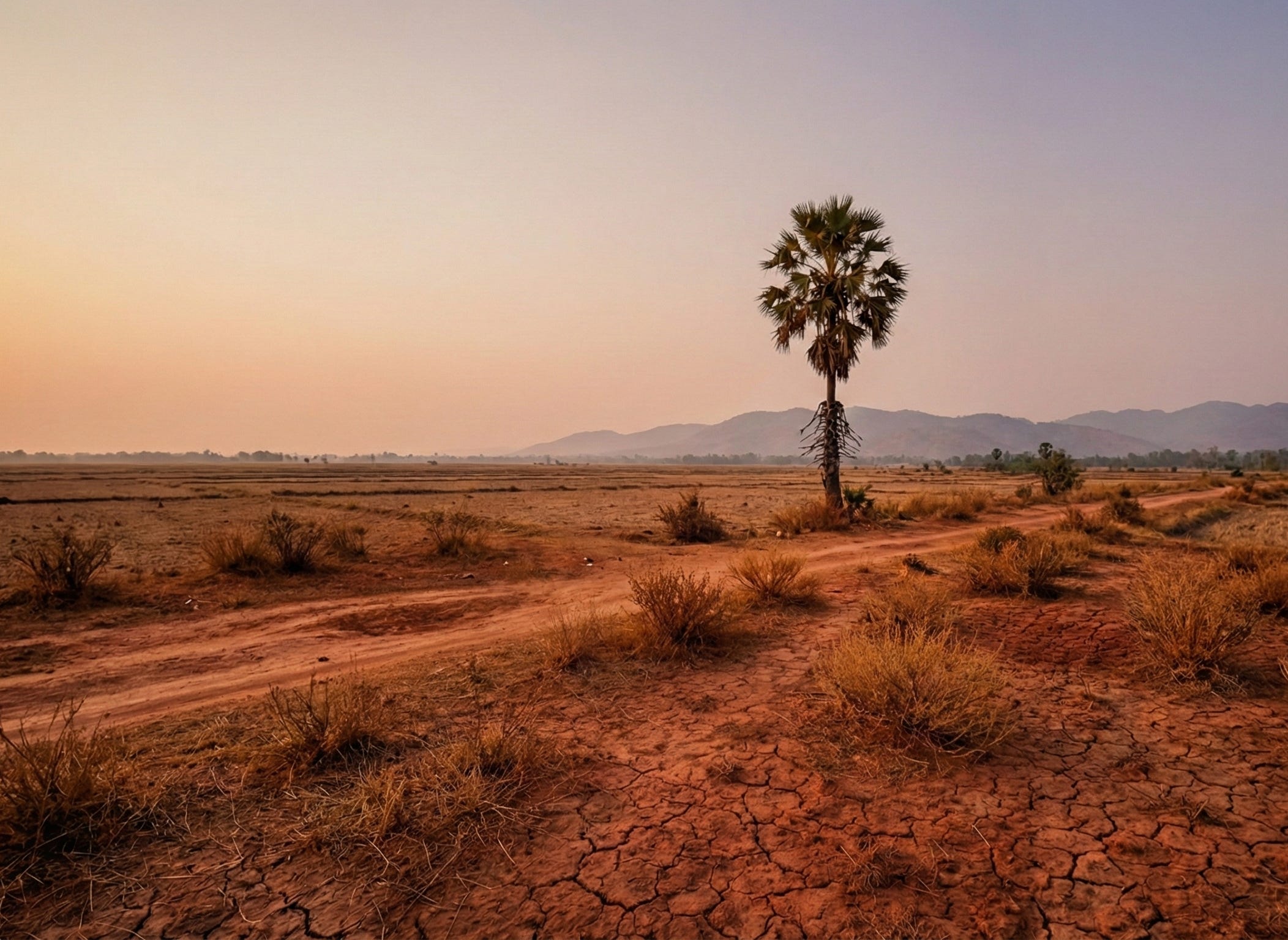
“No time to ask questions. No time to think. We just ran,” she said softly.
She recounted how she and her sisters were separated in the chaos. Hiding in a bush, she cowered under branches that clawed her arms, fearing for her life. At dawn, she returned to unimaginable horror: the bodies of mutilated and dismembered men, women, children lay everywhere. She found her parents and sisters among the dead.
I felt a knot tighten in my throat. My ears burned, and I noticed her polite smile give way to raw, heart-rending pain. My hand started sweating as I tried to absorb the shock of her words. After a long pause, I managed to ask in Vietnamese:
“Chị Hà ơi, chị bao nhiêu tuổi lúc đó?”
How old were you back then?
“Mười tám,” 18, she replied.
She was younger than I was at that time. Around us, people on the bus bowed their heads, silently honoring her lost family.
Chị Hà continued the story. After losing her family, she joined the army to protect those living near the border. She had no time to grieve, no time to process what had happened. As she put it: “I was young, and so much had already occurred. I just kept moving forward.”
Six months into her service, her platoon was ambushed by Pol Pot forces. One of her female comrades was captured. When they found this friend, she was lying on the ground—naked and brutally violated. But that wasn’t the worst of it.
“They planted a bomb in her private parts,” Chị Hà said, her voice trembling.
She and her team quickly backed away, horrified. Moments later, the bomb exploded, destroying her friend’s body even further. No one else was hurt physically, but the emotional impact was unforgettable. They stared at each other in numb shock, a coldness filling the air that words could never describe.
I could barely breathe after hearing this. I looked around the bus, and every passenger wore a haunted expression. For a while, no one spoke. Finally, a man named Hung stood up and introduced himself, offering his own wartime experience. Others soon followed, sharing stories that delved deeper and deeper into darkness. Fear and overwhelming sadness welled up inside me until I could no longer listen. I pressed my hands over my ears, seeking some refuge from the horror.
Yet, Minh, my older sister, continued listening intently—she was much braver than I was. We eventually arrived in Phnom Penh, each of us weighed down by what we had heard.
In the early afternoon, while the group checked into a hotel, I wanted to find Chị Hà. I still had questions about her decision to return to a place filled with such horrific memories. Minh noticed me slipping away and tried to stop me: “Ừn, em đừng hỏi nữa, sẽ làm chị ấy buồn.” “Un,” she called me by my family nickname, “don’t ask more questions; it’ll only make her sad.”
But when Minh got distracted, I approached Chị Hà anyway. I’ve always had a habit of speaking my mind—not out of boldness, exactly, but because my curiosity tends to grab hold and won’t let go until I ask. A quiet, honest question feels like the only way forward.
She was sitting by the lobby window, gazing out at the busy streets of Phnom Penh. I sat next to her and asked quietly: “Why come back here? Aren’t you afraid those terrible memories will haunt you again?”
She gave me a gentle smile. Despite everything, her face still held an almost radiant kindness—like a white daisy in full bloom.
“The war ended a long time ago, but for me, it feels like just yesterday,” she said. “Every night I dream of those scenes. The older I get, the more clearly I remember everything. My comrades and I took part in that war—we’ve had to struggle with the memories. Many nights I can’t sleep, thinking of my comrades, thinking of my family.”
She paused, then added: “I can only hope to let go of some part of it. By seeing their country, seeing their people, and feeling compassion for them. They suffered even more than we did.”
I swallowed hard. “Are you sure that will work?”
“I don’t know,” she admitted, “but I’ll try anything to ease those horrifying memories.”
Just then, Chị Hà mentioned that some in the group were planning to visit the Tuol Sleng Genocide Museum that evening.
“Do you want to come along?” she asked.
I felt a mix of emotions swirling inside me. I was nervous. Scared. A part of me wanted to go, to see it for myself to understand the pain etched into those walls and honor those lost lives. But another part of me wasn’t sure if my mind was strong enough. Just hearing Chị Hà’s story left my chest heavy. I could already feel that the museum would ask more of me than I could give.
Before I could respond, Minh appeared behind me, her hand landing gently but firmly on my shoulder.
“She’s not going,” she said with finality.
Then she looked at Chị Hà and added quietly, “But I will.”
I didn’t argue. I couldn’t. That moment split me open—not with anger, but in quiet, aching tenderness. In Minh’s eyes, I was still the youngest sister who needed protecting, not yet strong enough to step into the darkness and return untouched. Part of me wanted to resist, to prove I could face it, but another part understood she might be right.
After dinner, I lay on my hotel bed, the thin glow of streetlight slipping through the curtains and drifting slowly across the ceiling. The air felt heavy, thick with the faint scent of damp wood and the smoky breath of traffic seeping in from outside. My throat was dry. My heart beat slowly but heavily, each thud dragging my body as if through deep water. Chị Hà’s words still echoed in my mind that night—the dirt kicking up under bare soles, the bodies that littered the dawn, and her friend turned into a weapon. I tried to imagine what waited inside the museum: the musty air soaked in grief, photographs staring straight through you, and the kind of silence that’s never truly silent.
An electric shiver ran down my spine, both pulling me forward and holding me back. Curiosity whispered, “If you saw it with your own eyes, maybe you’d understand what no story can reach.” But fear replied, “If you go in, it might leave a mark you can never wash away.” Minh knew that. She knew I wasn’t ready—not yet—to face a darkness that could cling for a lifetime.
Minh returned late from the museum. She sank onto the bed with a long, heavy sigh and didn’t say a word. She hardly slept for months afterward. The look in her eyes said everything. She wasn’t just being firm. She was being protective, like a mother shielding her child from something she’d once seen and never forgotten. To her, I was still the baby sister. The one she carried when our parents were too busy, the one she struggled to teach homework, the one she still wanted to keep safe—even from history. So in that moment, I decided to let it go. I chose to honor that protection, even as I wrestled with questions in my heart.
Seeing how people like Chị Hà and my sister Minh chose to face those memories made me realize that “letting go” isn’t simple. Sometimes you have to stand right in front of the past—in the very places where it happened—to begin releasing it. Sometimes you have to wait until you’re strong enough.
At nineteen, I covered my ears. But Chị Hà’s words found me anyway, and they’ve lived in me ever since. Maybe telling their story is how I finally face what I couldn’t then—how I honor both their courage and Minh’s protection.
Very moving story. You bring these disturbing events so to life so vividly. In your writing I feel as though I am right there.
Such a powerful story and I hope you keep sharing these well written reflections and memories. They mean something to people like me who crave to hear the honesty and compassion